
SYDNEY CBD


SYDNEY CBD
SYDNEY CBD
SYDNEY CBD

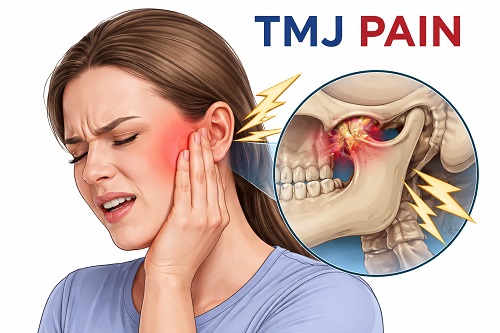
If your jaw clicks when you chew, feels tight in the morning, or hurts when you yawn, you’ve probably wondered if there’s something wrong with your jaw joint. You’re not alone in this. Jaw tension and TMJ symptoms are surprisingly common, and many people in and around Sydney live with them for years before realising something may actually be wrong.
And if you’ve searched online for answers, chances are high that you’ve come across something called the “3 finger test for TMJ”.
It sounds simple, maybe even a little strange, but dentists often use it as a quick way to look at jaw movement and possible TMJ symptoms.
It is not a medical diagnosis, and it certainly does not replace a proper assessment. However, it can sometimes give an early indication that the jaw is not moving as freely or comfortably as it should.
The idea behind the 3 finger test for TMJ is simple. If you can comfortably fit three fingers vertically between your upper and lower front teeth, your jaw opening is generally considered to be within a healthy range. If you cannot, it may point to restricted jaw movement or tension around the jaw joint and muscles.
TMJ stands for temporomandibular joint. These are the joints that connect your lower jaw to the skull on both sides of your face.
You use them constantly throughout the day when you:
When these joints or the surrounding muscles become strained or irritated, it can lead to what is commonly called a TMJ disorder.
For some people, symptoms come and go. Others notice the discomfort becoming more frequent over time.
Many patients are surprised to learn how much tension they have been carrying in their jaw for years. Some only realise there is a problem once headaches become more regular or the jaw starts clicking while eating.
The test itself only takes a few seconds.
Here is how to try it:
If three fingers fit comfortably, your jaw opening is generally considered normal.
If you struggle to fit three fingers, feel tightness, or notice pain while opening your mouth, it may suggest restricted jaw movement.
The test is mainly used as a simple jaw opening test to check how freely the jaw moves.
It may help identify early signs of:
Result | What It May Indicate |
Three fingers fit comfortably | Jaw opening may be within a normal range |
Tight fit with discomfort | Possible jaw tension or restricted movement |
Unable to fit three fingers | Reduced jaw mobility that may need assessment |
Pain while opening | Possible TMJ irritation or muscle strain |
Jaw locking or clicking | Signs that may be associated with TMJ symptoms |
It is important to remember that this test is only a guide. Some people naturally have smaller hands or slightly tighter jaw movement without having a TMJ disorder.
At the same time, some people with jaw pain and TMJ symptoms can still pass the test comfortably.
That is why symptoms and ongoing discomfort matter more than the test alone.
TMJ symptoms do not always begin with severe pain.
For many people, the first signs are subtle. It may start with jaw clicking while eating, tension near the temples, or stiffness after waking up in the morning.
Over time, those symptoms can gradually become harder to ignore.
| TMJ Symptom | What Patients Often Notice |
| Jaw clicking | Clicking or popping sounds while chewing or speaking |
| Jaw pain | Pain near the jaw joint, cheeks, or ears |
| Restricted jaw movement | Difficulty opening the mouth comfortably |
| Jaw locking | Jaw temporarily getting stuck open or closed |
| Headaches | Tension headaches around the temples or jaw |
| Facial tightness | Tight or tired feeling around the jaw muscles |
| Pain while chewing | Discomfort when eating harder foods |
Some people also notice their jaw feels tired after long conversations or stressful workdays.
Others experience headaches for years before realising the jaw may actually be contributing to the problem.
Teeth grinding and jaw clenching are two of the biggest contributors to TMJ problems.
A lot of people clench their jaw during the day without even realising it. Others grind their teeth while sleeping, especially during stressful periods.
Over time, that constant pressure can place strain on the jaw joints and surrounding tissues.
Many patients with TMJ symptoms only discover they have been grinding their teeth after noticing:
Jaw tension does not always stay mild.
In some cases, untreated clenching and strain can gradually increase pressure on the jaw joint and surrounding muscles. What starts as occasional clicking or tightness can slowly become ongoing discomfort.
Some people begin avoiding certain foods because chewing becomes uncomfortable. Others notice headaches becoming more frequent or their jaw feeling stiff after long days.
The earlier TMJ symptoms are assessed, the easier it often is to manage discomfort before it starts interfering with everyday life.
While professional assessment may still be necessary, small day-to-day habits can sometimes help reduce strain on the jaw.
These include:
Many people are surprised to realise they clench their jaw most while driving, working, or concentrating.
This is probably the most important thing to understand.
The 3 finger test can be useful as a quick self-check, but it cannot diagnose a TMJ disorder on its own.
Jaw pain and restricted movement can have several causes, including:
If symptoms continue returning or begin affecting your eating, speaking, or daily comfort, it may be time to have the jaw checked properly by a TMJ dentist in Sydney.
Not every jaw click requires treatment.
However, it is a good idea to seek professional advice if you regularly experience:
Early TMJ treatment may help reduce ongoing strain on the jaw joints and improve overall comfort before symptoms become more severe.
The 3 finger test for TMJ is a quick way to check jaw movement at home, but it should only be viewed as a general guide rather than a diagnosis.
If you are regularly noticing jaw pain, jaw clicking, headaches, tightness, or difficulty opening your mouth comfortably, it may be a sign that your jaw joints or surrounding muscles are under strain.
Smile Concepts provides personalised TMJ treatment in Sydney for patients experiencing jaw pain, restricted jaw movement, teeth grinding, and other TMJ symptoms. Treatment is tailored to each patient’s symptoms, jaw function, and overall comfort, to reduce pain and improve everyday movement.
To learn more or arrange an assessment, call Smile Concepts on (02) 9267 7777.
Smile Concepts is a high-end dental clinic in the heart of Sydney. To deliver the best service, we always prioritise your wellbeing so we can use our expertise to help you live a better life.


Dr. Manish Shah is a cosmetic dentist with a special interest in porcelain veneers, dental implants and Invisalign in Sydney.
Dr. Kinnar Shah is a cosmetic dentist with a special interest in cometic dentistry, porcelain veneers and dental implants practising at Smile Concepts.