Posterior Tongue Tie and Lip Tie: A Simple Guide for Parents
By Dr Manish Shah | Registered Dental Practitioner | Registered Medical Practitioner
13 October 2026
Table of Contents
If someone has told you your baby has a “posterior tongue tie” or a “lip tie,” you are probably feeling worried and unsure what to do. Feeding problems are stressful, and a clear answer can feel like a relief.
But this topic is full of strong opinions. Some are right. Others go further than the evidence allows. This guide explains where medical opinion stands today, in simple terms, so you can ask good questions and feel confident about your next step.
The Terminology Problem
A lot of the confusion comes from words. “Tongue tie” is used to describe several different things, and clinics do not always use the terms the same way.
Anterior vs posterior tongue tie
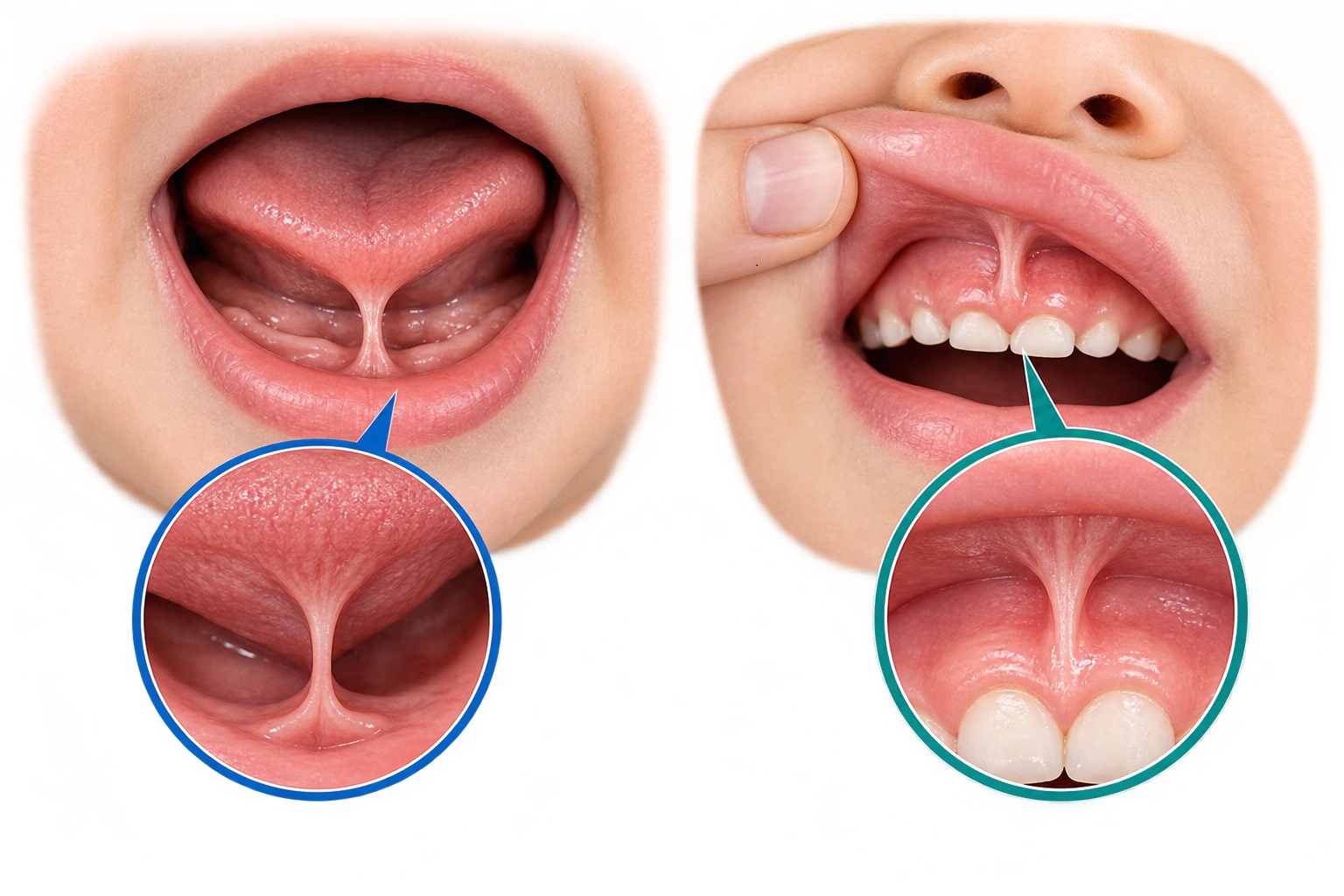
Anterior tongue tie: The thin band under the tongue is easy to see. It is short and attached near the tip of the tongue, and it clearly limits movement.
Posterior tongue tie: The tie is said to be further back, hidden under the lining of the mouth. It is usually found by touch rather than by sight.
What are Coryllos classes?
Coryllos classes are a way of grouping ties into four types:
Types I and II: Attached at or near the tip (anterior)
Type III: Attached around the middle or base of the tongue
Type IV: Hidden at the back and felt rather than seen
Types III and IV are what people usually mean by “posterior.” A similar grading system exists for lip ties.
Why posterior tie is not widely accepted as a diagnosis
The grading system describes what someone sees or feels. It is not a proven test. Many professionals are cautious because:
There are no agreed, objective rules for diagnosing a posterior tie
Two examiners may give different answers for the same baby
Some experts believe a “posterior tie” may simply be normal tissue that varies from baby to baby
Feeding problems have many other causes, such as latch, positioning, milk supply, muscle tone, or early birth
This does not mean every baby with a posterior finding is fine. It means a label alone should not decide treatment.
Where Lip Ties Do Matter
Lip ties are rarely a concern for newborns, but they can matter later in life.
Older children, teens, and adults
We pay attention to the tissue under the upper lip when it causes a clear, visible problem, such as:
Gum recession where the tissue pulls on the gum above the front teeth
A gap between the upper front teeth where thick tissue sits between them
Braces relapse, where a gap reopens after treatment
Hard-to-clean front teeth because of tension in the tissue
If a gap is your main concern, read our article on the hidden warning sign between your front teeth and our guide to gaps and spaces between teeth. If gum shape affects your smile, you may also like our gum contouring blog.
Why the picture changes with age
A baby’s lip tissue is often thick and low, and that is normal. As the jaw grows and teeth come in, it usually moves up and gets thinner. Gaps between the upper front teeth are also common in young children and often close on their own.
This is why we avoid treating a lip tie in a baby based on looks alone. In older patients, we can see and measure real problems, so decisions are easier to make.
How We Examine a Lip Tie
What we look for
How the tissue moves when the lip is lifted
Gum health and any recession nearby
Your child’s age and stage of tooth development
Any food, speech, cleaning, or braces concerns, and whether they are linked to the tissue
What we ignore
How tight or low the tissue looks on its own
Grades and labels without a real problem
Photos or labels from elsewhere as the only reason to treat
Why we say “no treatment needed”
Sometimes the honest answer is that nothing needs to be done and in that stage, we will tell you and explain why. We might suggest watching and reviewing as your child grows, or getting help from a lactation consultant or speech therapist. A good check-up should leave you better informed, whatever the result.
A clear, restrictive anterior tongue tie can affect feeding. Lip ties in babies rarely do. A posterior tie is still a contested diagnosis. In older children and adults, lip tissue can matter if it is linked to gum recession, a gap, or braces relapse.
If you have been told your baby or child has a tie and you want a balanced opinion, Smile Concepts is here to help. We will check how things work, explain our findings in plain language, and tell you when no treatment is needed.