





SYDNEY CBD
SYDNEY CBD

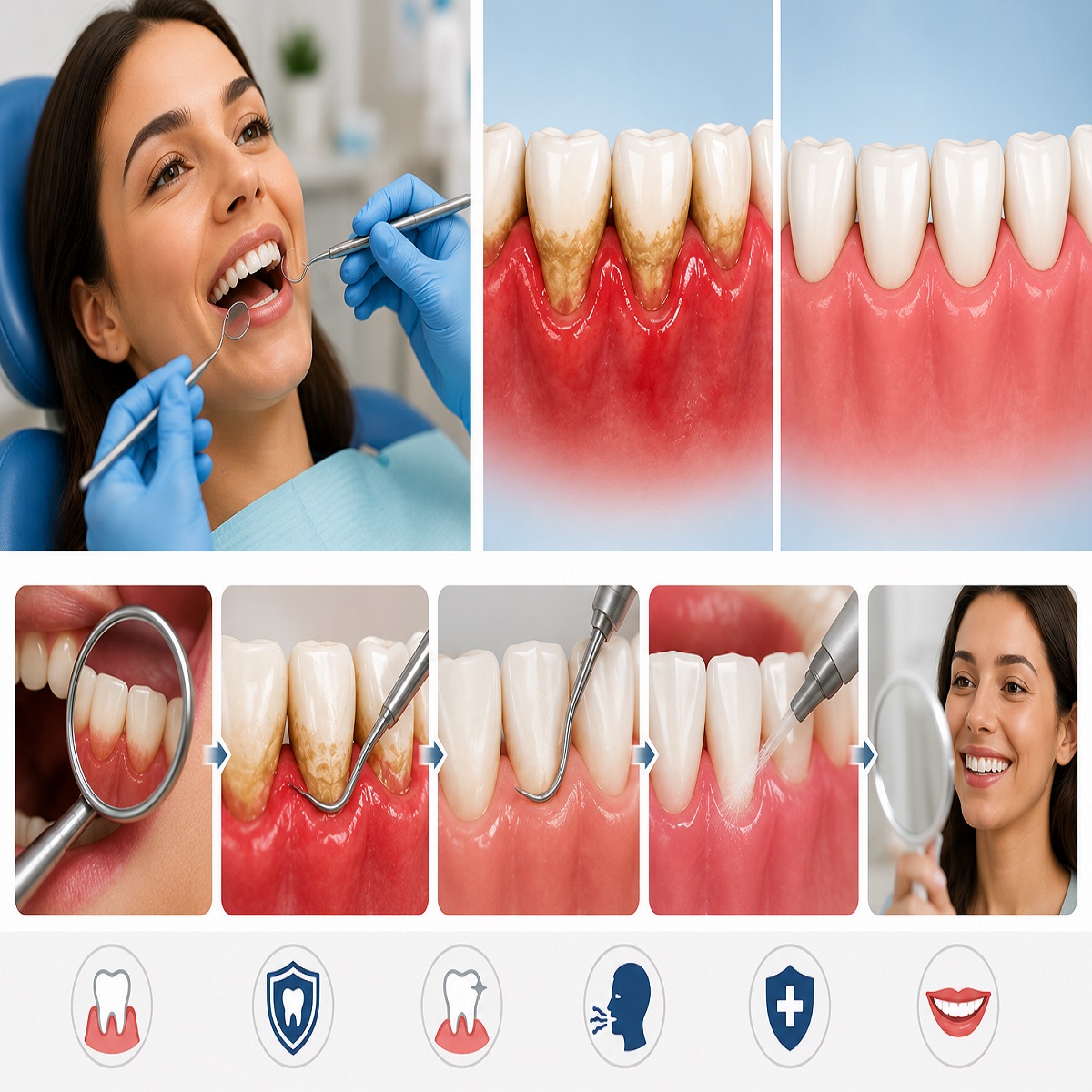
If your gums bleed when you brush your teeth, it’s easy to assume you’ve brushed a little too hard.
If your breath doesn’t feel as fresh as it used to, you might blame your morning coffee.
If your gums look slightly swollen, chances are you’ll tell yourself it’s nothing serious.
The reality is that these small changes are often the first signs of gum disease.
Every day, dentists see patients who ignored bleeding gums, bad breath, or gum sensitivity because they weren’t causing pain. Unfortunately, gum disease doesn’t always announce itself with obvious symptoms. It often develops quietly, and by the time discomfort appears, the condition may already be affecting the tissues and bone supporting your teeth.
The good news is that early gum disease treatment can stop the problem from progressing and help you maintain healthy teeth and gums for years to come.
If you’re experiencing any of the warning signs below, seeking professional gum disease treatment in Sydney could make all the difference.
Gum disease begins when plaque and bacteria build up around the gum line.
At first, this causes irritation and inflammation of the gums, a condition known as gingivitis. Left untreated, the infection can spread deeper below the gums and begin affecting the structures that hold your teeth in place.
What makes gum disease particularly challenging is that many people don’t realise they have it until noticeable damage has already occurred.
| Stage | What You May Notice |
|---|---|
|
Healthy Gums |
Firm gums with no bleeding or swelling |
|
Gingivitis |
Bleeding, redness, mild swelling |
|
Early Gum Disease |
Gum pockets begin forming around teeth |
|
Advanced Gum Disease |
Gum recession, loose teeth, bone loss |
The earlier you seek gum disease treatment in Sydney, the easier it is to manage the condition and protect your smile.
This is probably the most commonly ignored sign of gum disease.
Many people assume a little blood in the sink is normal. It isn’t.
Healthy gums generally shouldn’t bleed during everyday brushing and flossing. Bleeding is often a sign that bacteria and plaque have caused inflammation beneath the gum line.
You may notice:
If this is happening regularly, don’t wait for it to get worse. Bleeding gums are often one of the earliest warning signs that gum disease treatment may be needed.
Take a look at your gums in the mirror.
Healthy gums are usually firm and light pink. If they appear swollen, darker in colour, or feel tender when brushing, your gums may be reacting to bacterial infection.
The tricky part is that these changes often happen gradually. Because they develop slowly, many people simply get used to them.
Common signs include:
These symptoms can seem minor, but they’re often an indication that your gums need attention before the condition progresses further.
Everyone experiences bad breath from time to time.
However, if bad breath keeps returning no matter how often you brush, floss, or use mouthwash, there may be an underlying issue.
When bacteria collect beneath the gums, they release compounds that create unpleasant odours. Unfortunately, mouthwash only masks the problem temporarily.
Ask yourself:
Persistent bad breath is one of the most overlooked reasons people eventually seek gum disease treatment in Sydney.
Many people notice this change but don’t realise what’s causing it.
When gum disease progresses, the gums can begin pulling away from the teeth. This is known as gum recession.
As the gums recede, more of the tooth becomes visible, making teeth appear longer than before.
You might also notice:
Gum recession doesn’t usually reverse on its own, which is why early treatment is important.
This is one warning sign you should never ignore.
As gum disease becomes more advanced, it can affect the bone and connective tissue supporting your teeth.
Some people describe it as feeling like their teeth have shifted slightly. Others notice gaps appearing where there weren’t any before.
Warning signs include:
These symptoms often indicate that gum disease has progressed beyond the early stages and requires prompt professional care.
Answer these questions honestly:
| Question | Yes | No |
|---|---|---|
|
Do your gums bleed when brushing? |
☐ |
☐ |
|
Are your gums swollen or tender? |
☐ |
☐ |
|
Do you struggle with ongoing bad breath? |
☐ |
☐ |
|
Have your gums started receding? |
☐ |
☐ |
|
Have your teeth become loose or shifted? |
☐ |
☐ |
If you answered “yes” to even one of these questions, it’s worth arranging a professional assessment.
Many patients are surprised to learn that symptoms they’ve been living with for months are actually signs of gum disease.
One of the most common concerns patients have is whether treatment will be complicated or uncomfortable.
The answer depends on how advanced the condition is.
After examining your gums and measuring the spaces around your teeth, your dentist will recommend the most appropriate treatment plan.
Treatment may include:
Plaque and tartar are removed from above and below the gum line to reduce bacterial build-up.
Areas that can’t be reached with regular brushing are carefully cleaned to help the gums heal.
Regular reviews help keep gum disease under control and reduce the risk of future problems.
In more severe cases, additional treatment may be required to manage deeper infection and support long-term gum health.
One of the biggest mistakes people make is waiting until they experience pain.
By then, gum disease may have already caused damage that cannot be reversed.
Seeking gum disease treatment in Sydney early can help:
Early treatment is almost always simpler than treating advanced gum disease.
You don’t need severe symptoms to have your gums checked. If you’ve noticed:
it’s a good idea to arrange a professional examination.
Even mild symptoms can be an early warning sign that your gums need attention.
Professional treatment handles what your toothbrush can’t reach. What happens between appointments still matters enormously.
Brush along the gum line, not just across the teeth: A small-headed, soft-bristled brush angled at 45 degrees to the gum line reaches where plaque causes the most damage. Two minutes, twice daily, is the clinical recommendation.
Floss or use interdental brushes daily: About 35% of tooth surfaces are between teeth, completely unreachable by a toothbrush. Floss, interdental brushes, or water flossers all work. The one you’ll actually use consistently is the right answer.
Don’t avoid the areas that bleed: It feels counterintuitive, but cleaning inflamed gums consistently is what reduces the inflammation. Avoiding a spot because it bleeds gives the bacteria exactly the environment they need to keep multiplying.
Get professional cleaning at least every six months: Once plaque mineralises into calculus, only professional instruments can remove it. Six-monthly cleaning appointments are not optional maintenance for people with a history of gum problems; they’re the reason the gum disease doesn’t come back.
Bleeding gums should never be ignored. Neither should swelling, ongoing bad breath, gum recession, or loose teeth. These signs may seem small at first, but they can point to a condition that becomes much harder to treat when left unchecked.
Smile Concepts in Sydney CBD offers gum disease treatment from early-stage deep cleaning and laser therapy through to full surgical periodontal care. Call 02 9267 7777 or book online to arrange a consultation.
The sooner gum disease is identified, the better the outcome is likely to be.
For general educational purposes only. This blog is not a substitute for professional dental advice. Please consult a registered dental practitioner for a proper assessment and personalised treatment recommendations.
Yes. Bleeding gums at any frequency point to inflammation. Gum disease is not always constant; it has more active periods and quieter ones. Occasional symptoms do not mean nothing is going on.
Yes, you can. A standard dental check does not always include a full periodontal assessment with pocket depth measurements. If you have never specifically had one, ask for it at your next visit, especially if you have noticed any of the signs in this article.
Scaling and root planing are performed under local anaesthesia. Most patients feel pressure during the procedure rather than pain, and experience mild soreness for a day or two afterwards. Your dentist will explain exactly what to expect before anything begins.
It can, if home care and maintenance slip. Treatment controls the infection. Regular professional cleaning and consistent brushing and flossing at home are what keep it from returning. Many patients who have had periodontal treatment maintain healthy gums for years without any recurrence.